Ethernet Explained: The Technology That Built Modern Networking
Few technologies have shaped modern computing more profoundly than Ethernet. From the earliest local area networks at Xerox PARC in the 1970s to today’s multi-hundred-gigabit hyperscale data centers, Ethernet has evolved from a simple shared coaxial cable into the dominant wired networking technology on Earth.
Ethernet now powers nearly every major category of digital infrastructure:
- Enterprise networks
- Data centers
- Industrial automation
- Defense systems
- Tactical edge computing
- AI clusters
- Telecommunications
- Embedded systems
- Home networking
- Automotive networking
For rugged computing platforms, portable command centers, deployable AI systems, and military-grade field computers, Ethernet remains the universal interconnect standard. For a portable with multiple copper and fiber ports
This article examines Ethernet comprehensively, including its history, standards evolution, connectors, cabling, speeds, switching, routing, fiber technologies, and future direction.
What Is Ethernet?
Ethernet is a family of wired networking technologies standardized primarily under the IEEE 802.3 specification. It defines how devices communicate over copper or fiber-optic cabling using packets called Ethernet frames.
Ethernet operates primarily at:
- Layer 1 (Physical Layer)
- Layer 2 (Data Link Layer)
of the OSI networking model.
At its core, Ethernet specifies:
- Cabling types
- Signaling methods
- Frame formats
- Addressing
- Collision handling
- Duplex operation
- Link speeds
- Media access methods
Modern Ethernet is typically switched, full-duplex, and packet-based.
The Origins of Ethernet
Ethernet was invented in 1973 at Xerox Palo Alto Research Center (PARC) by Robert Metcalfe and collaborators including David Boggs.
The original inspiration came from:
- ALOHAnet packet radio systems
- ARPANET networking research
The idea was revolutionary for its time:
A group of computers could share a common communication medium without centralized control.
The original Ethernet used a shared coaxial cable and operated at approximately 2.94 Mbps.
In 1980, Xerox, DEC, and Intel jointly released the DIX Ethernet specification, which later evolved into IEEE 802.3.
Ethernet Naming Convention Explained
Ethernet naming conventions often look cryptic:
- 10BASE5
- 100BASE-TX
- 1000BASE-LX
- 10GBASE-T
These names actually contain useful technical information.
Example: 1000BASE-T
- 1000 = speed in Mbps
- BASE = baseband signaling
- T = twisted pair copper
Example: 10BASE5
- 10 Mbps
- Baseband
- 500 meter maximum segment length
This naming convention has persisted for decades across copper and fiber Ethernet standards.
Early Ethernet: Coaxial Cable Era
The first Ethernet deployments used coaxial cable in a bus topology.
10BASE5 — Thick Ethernet
Also called “Thicknet,” this standard used large 50-ohm coaxial cable.
Characteristics:
- 10 Mbps
- Up to 500 meters per segment
- Vampire tap connections
- Shared collision domain
- Very rigid cable
Advantages:
- Long reach for the time
- Robust signaling
Disadvantages:
- Difficult installation
- Complex troubleshooting
- Entire segment failure risk
10BASE2 — Thin Ethernet
Later “Thinnet” Ethernet reduced cost and cable size.
Characteristics:
- BNC connectors
- Flexible coax
- 185 meter segments
- Lower deployment cost
This became common in the 1980s before twisted-pair Ethernet dominated.
The Shift to Twisted Pair Ethernet
The major breakthrough came with twisted-pair Ethernet and star topology networking.
10BASE-T
Standardized in 1990 as IEEE 802.3i.
This changed Ethernet fundamentally.
Instead of:
- One shared cable
networks now used:
- Point-to-point connections
- Central hubs
- Easier troubleshooting
- Structured cabling
Benefits included:
- Lower installation cost
- Simpler maintenance
- Better scalability
- Improved reliability
This architecture remains dominant today.
Ethernet Topologies
Bus Topology
Early Ethernet used a shared bus.
Problems included:
- Single cable failure impacting entire network
- Collision-heavy operation
- Poor scalability
Star Topology
Modern Ethernet uses star topology.
Each device connects to:
- A switch
- A router
- A hub (historically)
Advantages:
- Isolation of failures
- Easier diagnostics
- Dedicated bandwidth
- Higher reliability
Ethernet Connectors
Ethernet connectors vary depending on media type and speed.
RJ45 Connector
The most common Ethernet connector.


7
Used for:
- Cat5e
- Cat6
- Cat6A
- Cat7
- Cat8
Typical applications:
- Office networking
- Industrial networking
- Rugged computing systems
- Tactical networking
Supports:
- 10 Mbps to 10 Gbps over copper
Maximum typical distance:
- 100 meters
BNC Connector
Used in older coaxial Ethernet networks.


7
Common in:
- 10BASE2
- Legacy industrial systems
Largely obsolete today.
Fiber Connectors
Fiber Ethernet uses specialized optical connectors.
Common types include:
- LC
- SC
- ST
- MPO/MTP


5
Fiber connectors are common in:
- Data centers
- Long-distance networking
- Military communications
- High-speed AI clusters
Ethernet Cable Categories
Copper Ethernet evolved through multiple cable categories.
| Category | Typical Speed | Common Use |
|---|---|---|
| Cat3 | 10 Mbps | Legacy telephone/Ethernet |
| Cat5 | 100 Mbps | Fast Ethernet |
| Cat5e | 1 Gbps | Gigabit Ethernet |
| Cat6 | 1–10 Gbps | Enterprise networking |
| Cat6A | 10 Gbps | Data centers |
| Cat7 | 10 Gbps+ | Shielded environments |
| Cat8 | 25–40 Gbps | High-speed short-run data centers |
Modern rugged systems frequently use:
- Cat6
- Cat6A
- Shielded industrial Ethernet
for EMI resistance and high throughput.
Ethernet Speeds Through History
Ethernet speed evolution is one of the most remarkable stories in computing.
| Generation | Speed | Approximate Introduction |
|---|---|---|
| Original Ethernet | 2.94 Mbps | 1973 |
| Standard Ethernet | 10 Mbps | 1980s |
| Fast Ethernet | 100 Mbps | 1995 |
| Gigabit Ethernet | 1 Gbps | 1998–1999 |
| 10 Gigabit Ethernet | 10 Gbps | Early 2000s |
| 40/100 Gigabit Ethernet | 40–100 Gbps | 2010s |
| 200/400 Gigabit Ethernet | 200–400 Gbps | Late 2010s |
IEEE has continued pushing Ethernet speeds upward for hyperscale networking and AI infrastructure.
Copper vs Fiber Ethernet
Copper Ethernet
Advantages:
- Lower cost
- Easy deployment
- Power over Ethernet capability
- Familiar infrastructure
Limitations:
- Distance limitations
- EMI susceptibility
- Higher attenuation at high speeds
Typical maximum distance:
- 100 meters
Fiber Ethernet
Advantages:
- Extremely long distance
- Immunity to EMI
- Massive bandwidth
- Low signal loss
- Better security against interception


7
Common ranges:
| Fiber Type | Typical Distance |
|---|---|
| Multimode | Hundreds of meters |
| Single-mode | Tens to hundreds of kilometers |
Fiber dominates:
- Backbone networks
- Data centers
- Telecom infrastructure
- High-performance computing
Ethernet Switching
One of the biggest advances in Ethernet was the transition from hubs to switches.
Ethernet Hubs
Hubs simply repeated traffic to all ports.
Problems included:
- Shared collision domains
- Reduced performance
- Excessive unnecessary traffic
Ethernet Switches
Switches intelligently forward frames only to the correct destination port.
Benefits:
- Dedicated bandwidth
- Full-duplex operation
- Reduced collisions
- Improved security
- Better scalability
Modern Ethernet is fundamentally switch-based.
MAC Addresses
Every Ethernet device contains a unique hardware identifier called a MAC address.
Example:
00:1A:2B:3C:4D:5E
MAC addresses operate at Layer 2 and are used by switches to forward traffic correctly.
Ethernet Frames
Ethernet communication occurs through Ethernet frames.
A frame typically contains:
- Destination MAC address
- Source MAC address
- EtherType field
- Payload data
- CRC error checking
This framing system is one reason Ethernet became highly interoperable.
Collision Detection and CSMA/CD
Early Ethernet used:
Carrier Sense Multiple Access with Collision Detection (CSMA/CD)
Devices listened before transmitting.
If two devices transmitted simultaneously:
- A collision occurred
- Both retransmitted later
This was necessary in shared-medium Ethernet.
Modern switched full-duplex Ethernet effectively eliminated collisions.
Full Duplex Ethernet
Full duplex allows simultaneous transmission and reception.
Benefits:
- Doubled effective bandwidth
- No collisions
- Lower latency
- Higher efficiency
Modern Ethernet switches operate almost entirely in full-duplex mode.
Ethernet Routing vs Switching
These concepts are frequently confused.
Switching
Switches operate primarily at Layer 2.
They forward traffic based on:
- MAC addresses
Switches are optimized for local network traffic.
Routing
Routers operate primarily at Layer 3.
They forward traffic based on:
- IP addresses
Routers connect:
- Different networks
- WAN links
- Internet connections
Modern enterprise devices often combine:
- Switching
- Routing
- Security
- VLAN management
- QoS
into integrated platforms.
VLANs
Virtual LANs (VLANs) logically separate networks over shared infrastructure.
Benefits:
- Security segmentation
- Traffic isolation
- Easier management
- Multi-tenant networking
Common in:
- Enterprise networks
- Defense systems
- Industrial automation
- Tactical operations
Power over Ethernet (PoE)
Power over Ethernet allows devices to receive both:
- Data
- Electrical power
through one Ethernet cable.
Common powered devices include:
- IP cameras
- Wireless access points
- VoIP phones
- Sensors
- Industrial equipment
PoE simplified deployments dramatically.
Ethernet in Data Centers
Ethernet became dominant in data centers because of:
- Standardization
- Cost efficiency
- Scalability
- Interoperability
Modern AI and HPC clusters use:
- 100GbE
- 200GbE
- 400GbE
for massive east-west traffic.
Ethernet in Rugged and Tactical Systems
Ethernet is critical in rugged computing because it provides:
- Universality
- Reliability
- High throughput
- Long cable reach
- Interoperability
Applications include:
- Tactical operations centers
- Rugged portable workstations
- Shipboard systems
- UAV control
- Sensor fusion
- AI edge inference
- Cybersecurity appliances
- Industrial control systems
Rugged systems often use:
- Shielded Ethernet
- Locking connectors
- Fiber uplinks
- MIL-spec networking hardware
Automotive Ethernet
Modern vehicles increasingly use Ethernet instead of legacy CAN or proprietary buses for high-bandwidth systems.
Applications include:
- ADAS
- Autonomous driving
- Cameras
- Radar
- Infotainment
IEEE standards now include specialized automotive Ethernet variants.
Single Pair Ethernet
Single Pair Ethernet (SPE) reduces Ethernet to one twisted pair.
Advantages:
- Lower weight
- Smaller connectors
- Industrial compatibility
- Automotive integration
Important for:
- Industrial IoT
- Building automation
- Embedded systems
Ethernet and AI Infrastructure
AI is driving Ethernet to unprecedented speeds.
Modern GPU clusters require:
- Massive bandwidth
- Ultra-low latency
- Lossless transport
- Scalable switching fabrics
Ethernet increasingly competes directly with InfiniBand in AI infrastructure.
400GbE and 800GbE deployments are expanding rapidly.
Why Ethernet Won
Ethernet survived while many competing technologies disappeared.
Why?
Because Ethernet achieved:
- Open standardization
- Backward compatibility
- Vendor interoperability
- Massive economies of scale
- Continuous speed evolution
- Simplicity
- Reliability
Technologies that Ethernet largely displaced include:
- Token Ring
- ARCNET
- FDDI
- ATM LANs
The Future of Ethernet
Ethernet continues evolving toward:
- 800GbE
- 1.6TbE
- AI-optimized fabrics
- Time-sensitive networking
- Deterministic Ethernet
- Industrial real-time Ethernet
- Automotive Ethernet
- Edge AI networking
It is unlikely any other wired networking technology will replace Ethernet broadly in the foreseeable future.
Instead, Ethernet continues absorbing new roles and capabilities.
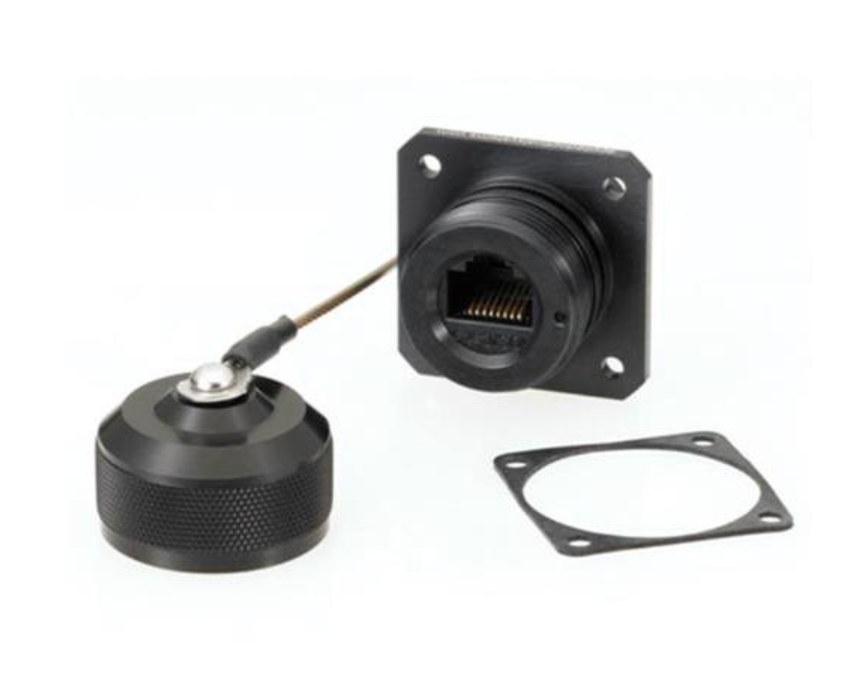
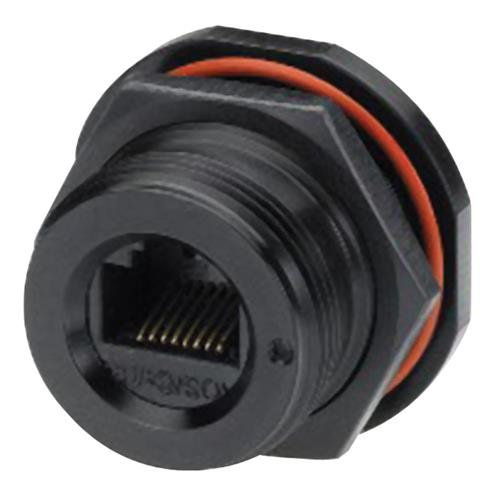
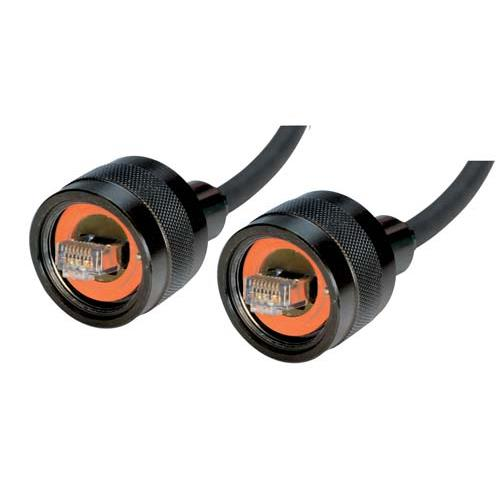
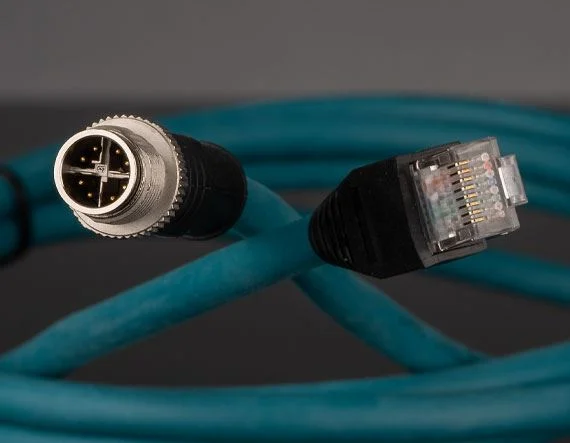
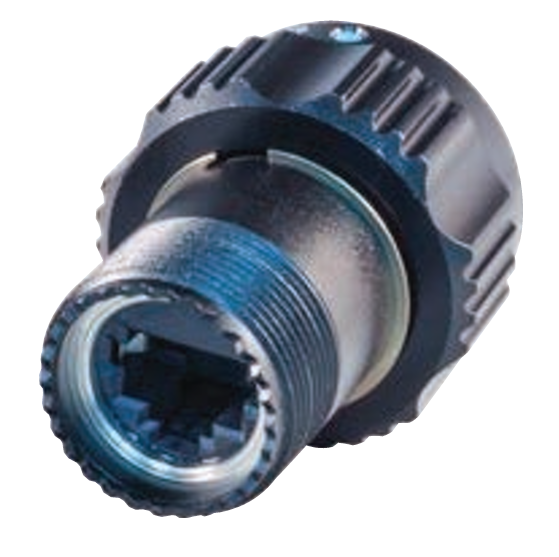
Rugged Ethernet Connectors
Final Thoughts
Ethernet began as an experimental local networking system at Xerox PARC and evolved into the foundational communications fabric of modern civilization.
Today it connects:
- Data centers
- Tactical operations
- AI systems
- Industrial infrastructure
- Enterprise networks
- Autonomous systems
- Military platforms
- Edge computing environments
Its success comes from a rare combination of:
- Technical simplicity
- Continuous evolution
- Open standards
- Interoperability
- Massive industry support
From 10 Mbps coaxial cables to 400 gigabit fiber fabrics, Ethernet has remained remarkably adaptable for over 50 years — and it continues to define the future of wired networking.